
How to Display Sculptures at Home Like an Interior Designer
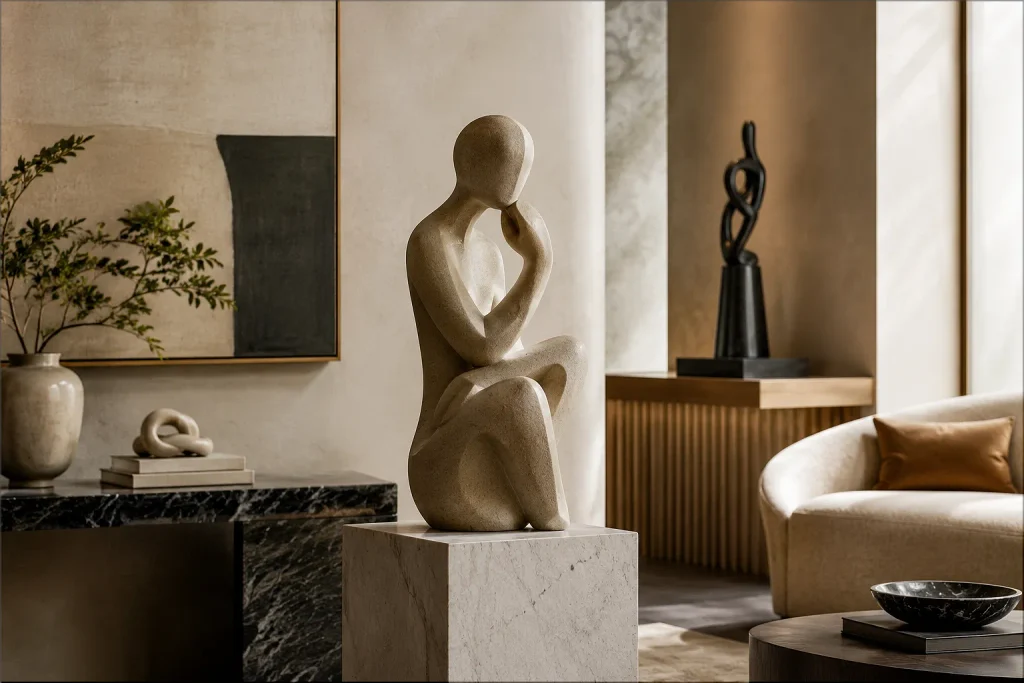
A sculpture gives a room silhouette, texture, and personality. Yet a home decor sculpture can disappear at the wrong height, among too many objects, or without contrast.
The secret to how to display sculptures at home is treating each piece as part of the architecture. Start with scale, give the eye somewhere to rest, and choose a setting that supports the material and mood. These ideas work in living rooms, entryways, libraries, bedrooms, offices, and homes.
Start With the Sculpture’s Story and Scale
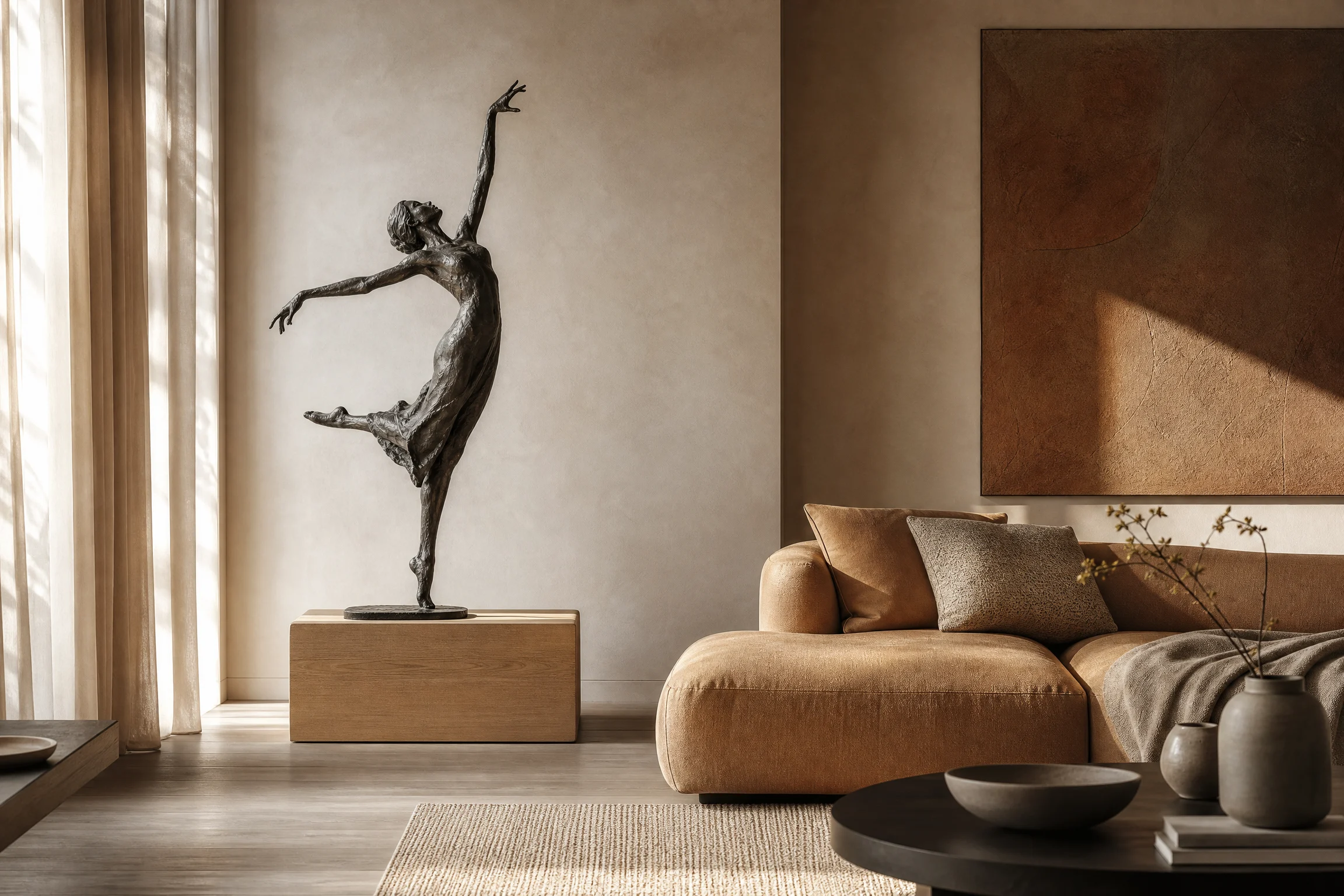
Before choosing a table or shelf, ask what the sculpture communicates. A Dancer Statue suggests movement, while a Thinker Statue creates a quieter, contemplative mood. A rough Stone Sculpture feels grounded and architectural; a glossy Glass Sculpture feels lighter and reflective. The surrounding room should reinforce that story instead of competing with it.
Scale is the first practical test. A tall floor sculpture can anchor an empty corner, while a small figurine suits a shelf, bedside table, or console. Let the piece carry enough visual weight to be noticed from the room’s main entrance; if it looks tiny, move it closer or place it on a discreet plinth.
Inspect the silhouette from several angles. Sculptures are three-dimensional, so they should not be pushed flat against a wall unless designed as reliefs. Leave space around open forms, and avoid placing a busy Abstract Sculpture in front of equally busy artwork.
For a seasonal refresh, apply the same editing principle found in these cozy fall bedroom ideas: choose one memorable object and support it with a calm palette.
Build a Focal Point on a Console or Pedestal
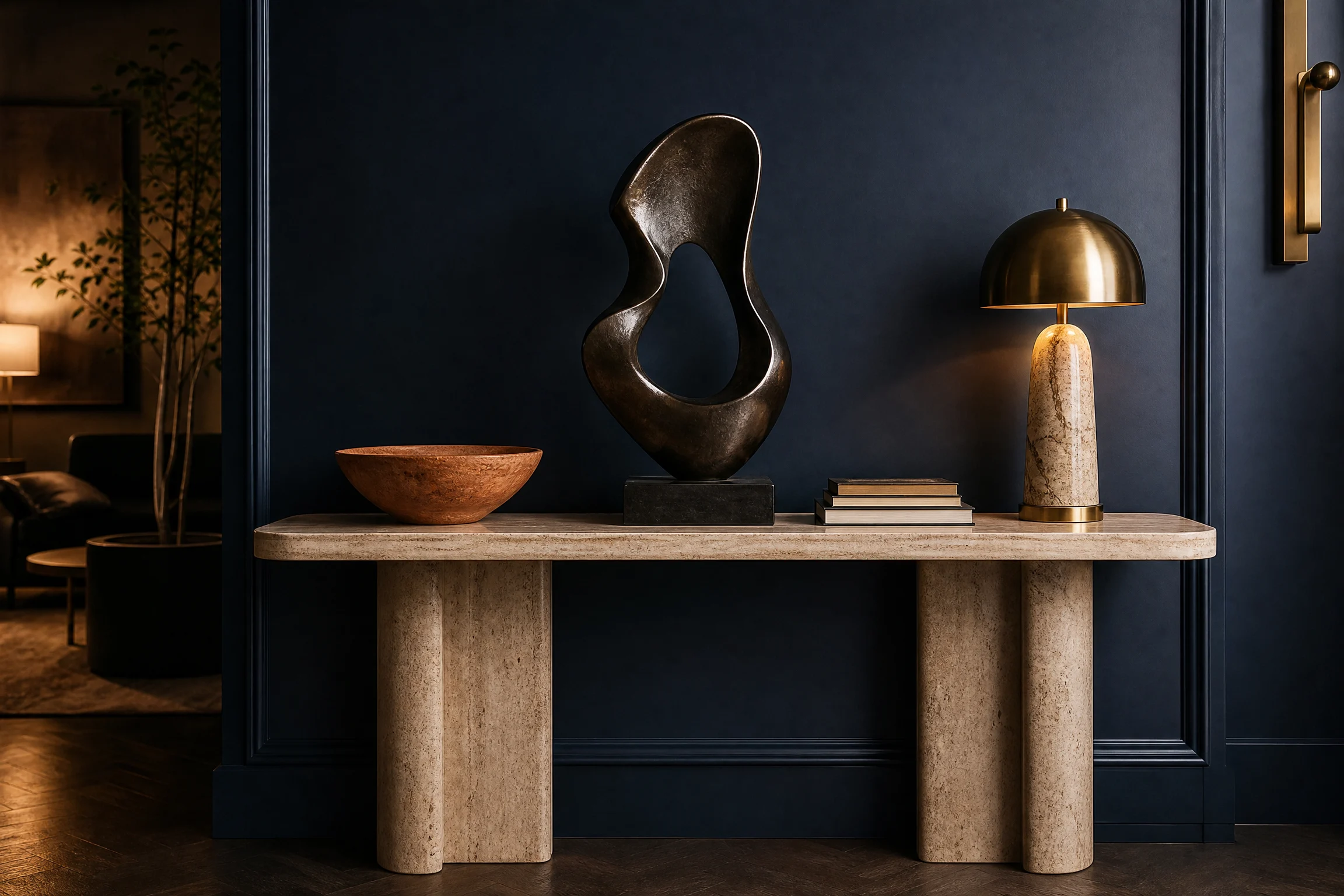
A console table naturally creates a visual stage. In an entryway, center one Entrance Sculpture and give it room to breathe. In a living room, use a console behind the sofa or beneath a mirror, taking care that the sculpture does not disappear into the reflection.
Try a three-part composition: one hero sculpture, one low horizontal object, and one small supporting accent. Combine a dark Modern Statue with a shallow ceramic bowl and a short stack of books. The low object stabilizes the arrangement; limit other materials so the sculpture remains the focus.
Use a pedestal when the sculpture deserves attention from every side. Choose a quiet, sturdy base wider than the sculpture’s footprint. A narrow, top-heavy object should never sit where a shoulder, pet, or passing bag could knock it over. A freestanding Decorative Stand avoids drilling; these damage-free rental decorating ideas offer related flexible solutions.
Amazon — console and pedestal styling: Browse decorative sculpture pedestals on Amazon. Look for a weighted base, a top surface wider than the sculpture’s footprint, and a finish that repeats a color already present in the room.
Style Shelves With Height, Rhythm, and Breathing Room
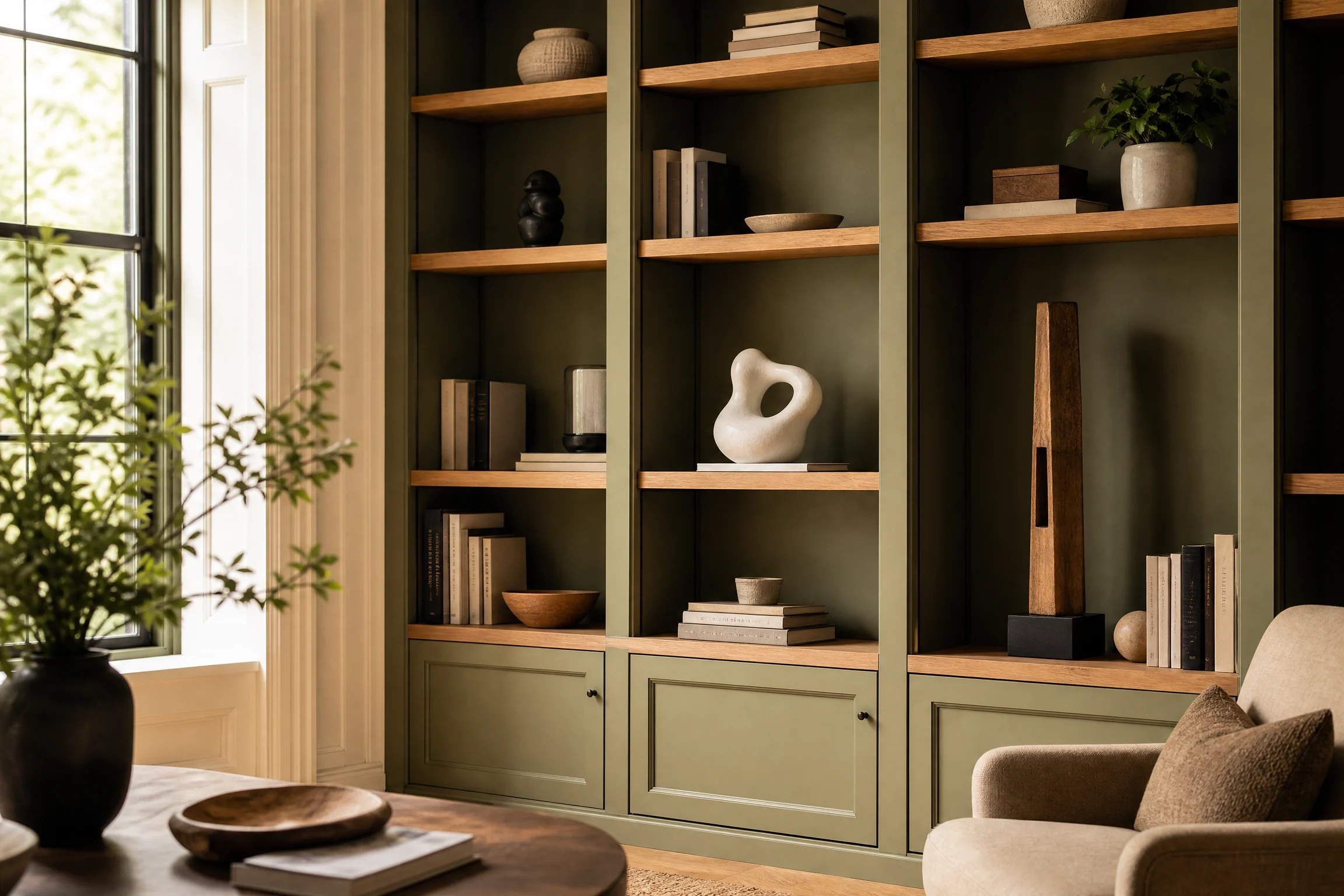
Bookshelves and built-ins work beautifully for collections, but do not fill every opening. Remove half of the objects, place the largest sculpture where its outline is clear, then add a smaller piece two or three shelves away. This creates rhythm and keeps the eye moving.
Vary visual weight from shelf to shelf. A tall wooden totem can balance a low marble form, while a white Ceramic Decor piece stands out against olive or charcoal backing. Use a Stack Of Books as a riser only when it looks intentional and stable; avoid unstable piles beneath heavy stone or marble.
Think in diagonals. If three sculptures form a straight vertical line, shift one slightly left, another slightly right, and leave one compartment nearly empty. This makes the arrangement feel collected rather than staged in a Cozy Home Library, office bookshelf, or reading nook.
Continue the visual story with how to style a console table or functional home office ideas, particularly if your shelves must remain useful.
Use Light to Reveal Texture and Form
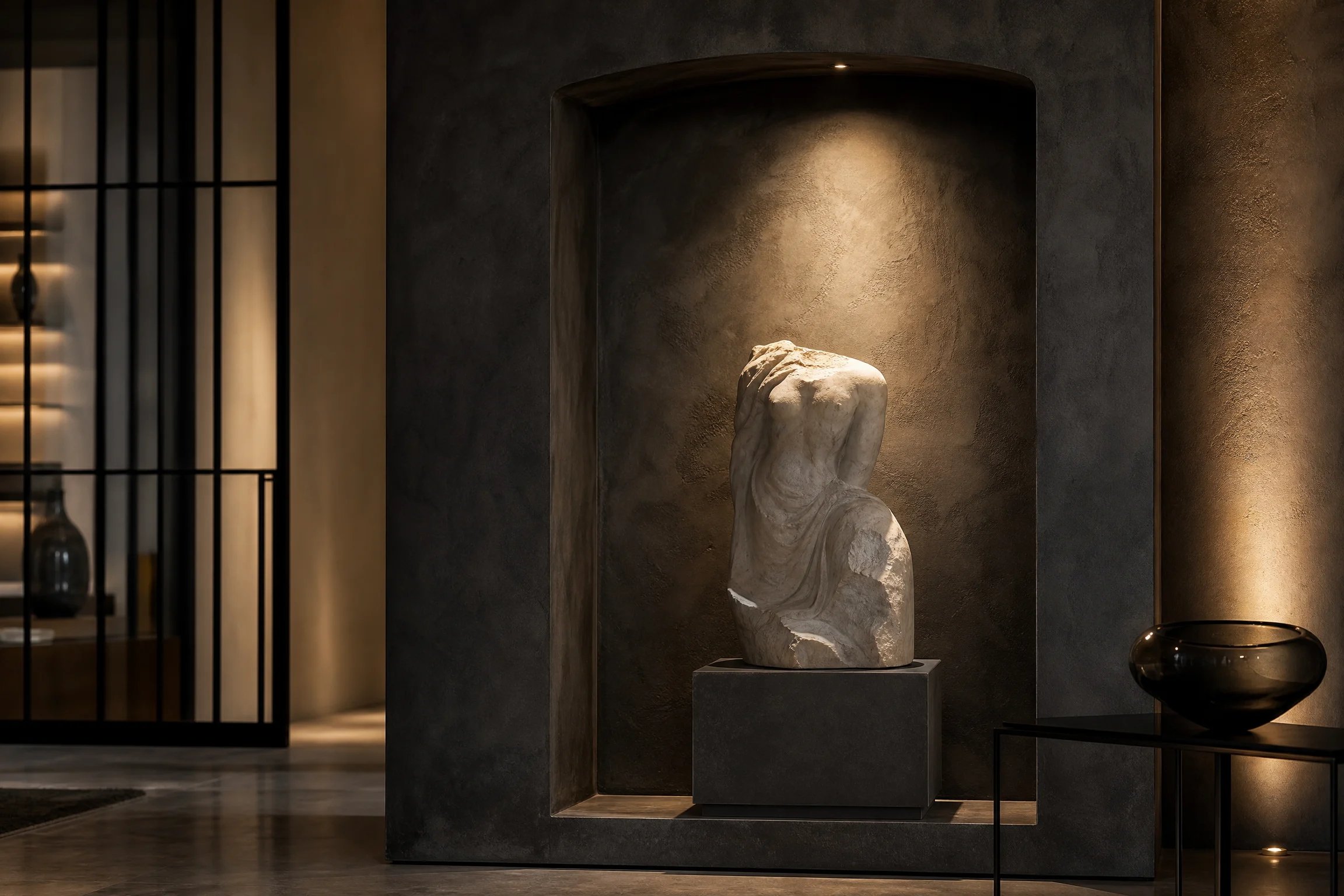
Good lighting can make a modest sculpture feel gallery-worthy. Aim light from above and slightly to the side so texture creates gentle shadow. Adjustable track lights, picture lights, or a directional lamp let you change the angle as the display evolves.
Avoid placing delicate pieces in harsh, direct sun for long periods. Filtered daylight is safer than an unprotected sunny sill because light can damage sensitive materials and finishes. The Canadian Conservation Institute and Getty Research Institute both identify controlled light exposure as an important conservation concern 1 2. For unknown materials, keep the sculpture away from heat, moisture, and strong glare, and ask a conservator before applying cleaner.
Dust with care. Never spray household cleaner directly onto a sculpture, and do not assume every surface can tolerate a damp cloth. Painted, gilded, porous, or antique objects may require specialist care. The Museum of Modern Art also advises avoiding display areas with high humidity or water-leak risk 3. A stable location is often more valuable than a dramatic but risky one.
Amazon — lighting for a niche or shelf: Consider adjustable LED art lights on Amazon. Choose a warm-white option with dimming control, then aim the beam so the sculpture is illuminated without creating glare for anyone seated nearby.
Make Small Rooms Feel Intentional, Not Crowded
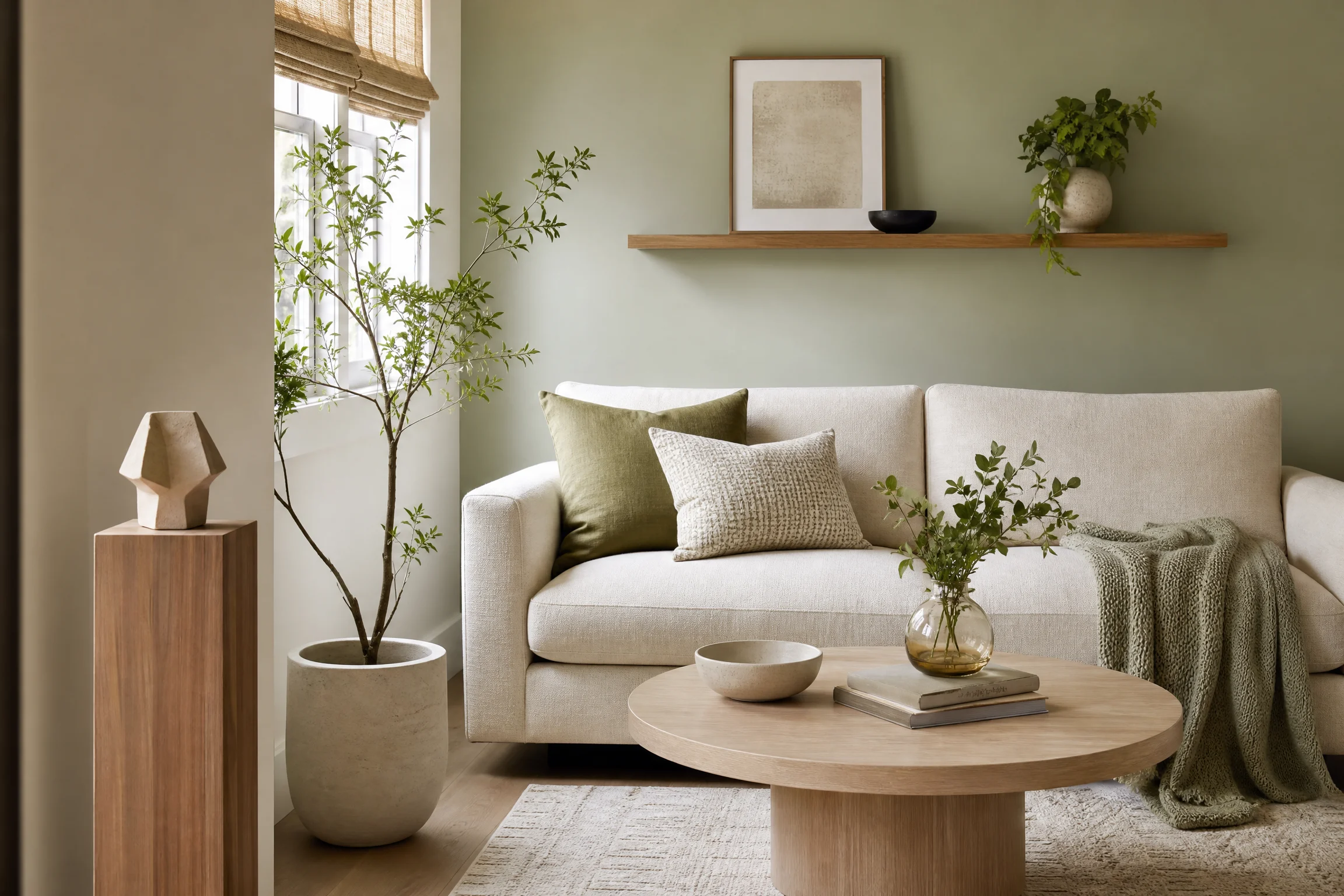
Small-space living does not mean giving up on sculpture; it means choosing fewer, better-placed pieces. A slim pedestal beside a reading chair creates a vertical moment, while a narrow wall shelf can hold one small Geometric Sculpture without blocking circulation.
In a compact living room, relate the sculpture’s color to the existing palette. Pale stone looks calm against sage, cream, or warm gray; black metal adds definition to light furniture. Use one sculptural object on a coffee table rather than several miniature items that interrupt daily use.
Safety matters as much as appearance. Keep fragile pieces away from the edge of a table, secure tall objects on uneven floors, and avoid placing heavy sculptures above seating or beds. If you live with children or pets, favor broad-based forms, enclosed display cabinets, or higher shelves. A Display Cabinet Modern in glass or acrylic can protect small collectibles while keeping them visible.
Stand at the doorway, sit in the main chair, and photograph the display from both positions. Remove anything that steals attention from the sculpture. The best result is rarely the most decorated one; it is the one where the sculpture looks as though the room was designed around it.
The Designer’s Five-Minute Sculpture Checklist
Before you finish, ask whether the sculpture is visible, correctly scaled, surrounded by breathing room, well lit, and safely supported. Whether your taste leans toward Marble Statues, an Artistic Sculpture, or a handcrafted object, thoughtful placement gives it more presence than an unedited collection.
For readers researching “piperton-outdoor-living-spaces display sculptures at home,” select weather-appropriate outdoor materials, protect porous surfaces, and keep sculptures away from walkways. Indoors or out, display is a conversation between object, light, and space.
Recommended Amazon Finds
| Use case | Suggested product | Why it helps |
|---|---|---|
| Height and presence | Decorative sculpture pedestal | Raises a sculpture to a more visible viewing level. |
| Shelf and tabletop protection | Clear museum putty for decor | Helps stabilize lightweight objects; test compatibility on an inconspicuous area first. |
| Focused illumination | Adjustable LED art light | Adds directional light to a niche, shelf, console, or pedestal. |
Disclosure: The Amazon links above are product-search links. If you purchase through a qualifying link, the publisher may earn a commission at no additional cost to you. Verify current product details, dimensions, reviews, and compatibility before buying.