
How to Create a Functional Home Office: 8 Stylish Layout Ideas
Working from home is much easier when your surroundings support the way you actually work. A desk that is too small, poor lighting, tangled cords, and a chair that leaves you uncomfortable can make even a simple workday feel unnecessarily difficult. The goal is not to create a room that looks like a corporate office. It is to design a beautiful and functional home office where everything has a purpose and the space still feels like part of your home.
The best functional home office ideas begin with your routine. Think about how much equipment you use, whether you need video-call space, how often you move around, and what storage would make your day smoother. From there, you can choose a layout, furniture, lighting, and decor that work together instead of competing for attention.
This guide explains how to create a functional home office in several types of spaces, including a dedicated room, a compact corner, a living room, an enclosed porch, or a finished attic. Use the ideas that fit your home, budget, and work style.
How to Create a Functional Home Office: Start With the Right Layout
A functional home office starts with a layout that makes movement easy. Before buying furniture, measure the room and mark the location of doors, windows, outlets, radiators, and built-in storage. Then decide where your primary work surface should go. In most rooms, the desk works best near natural light, but it should not sit directly in front of a bright window if glare will make your monitor difficult to see.
A desk placed perpendicular to the window is often a practical compromise. It brings daylight into the room while reducing the chance of strong reflections on the screen. Leave enough room behind the chair to pull it out comfortably, and keep the main walkway clear so the office does not feel like an obstacle course.
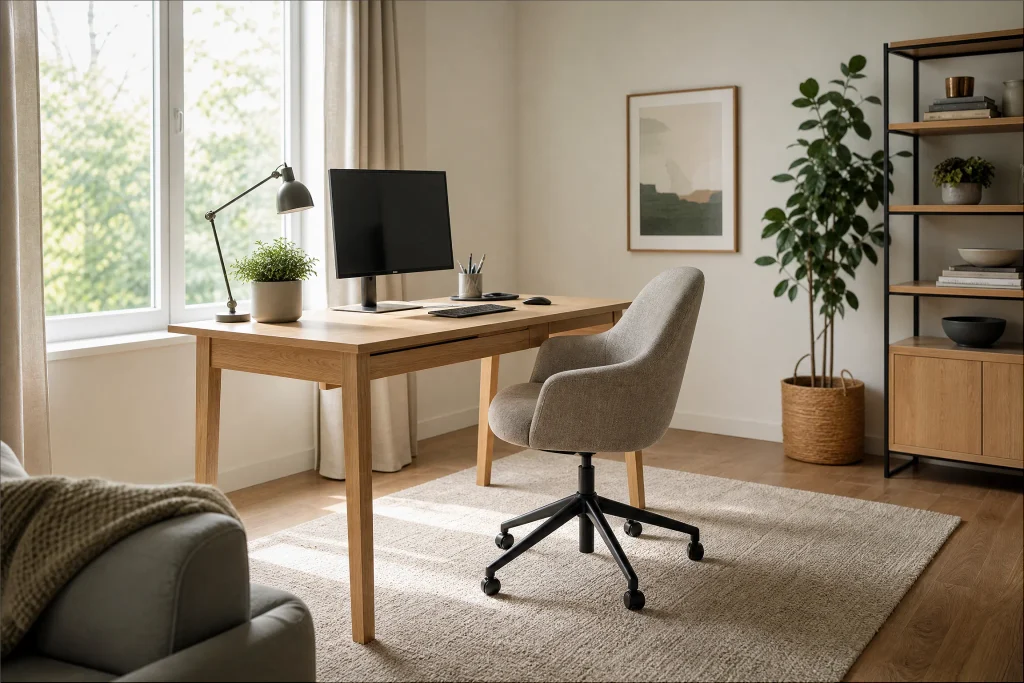
Your monitor, keyboard, notebook, and frequently used supplies should sit within easy reach. Less frequently used items can move into drawers, cabinets, or shelves. This simple separation keeps the desktop calm without making important tools difficult to find.
Think in zones when planning your functional home office space layout:
| Zone | Purpose | Useful choices |
|---|---|---|
| Work zone | Daily computer work, writing, and calls | Desk, ergonomic chair, monitor, task lamp |
| Storage zone | Supplies, paperwork, technology, and files | Drawers, cabinets, shelves, baskets |
| Reset zone | Short breaks, reading, or planning | Small armchair, side table, plant, or open floor area |
A functional layout should also account for technology. Place the desk close enough to power and internet connections that you do not need extension cords stretched across the floor. If the room has limited outlets, choose a cable-management system before the cords become a permanent part of the decor.
Amazon product: A comfortable ergonomic office chair with adjustable lumbar support can make the entire setup feel more usable. Buy ergonomic office chair on Amazon and compare seat height, back support, armrests, and reviews before choosing one.
Functional Small Home Office Ideas for Tight Spaces
A small room does not prevent you from creating a functional small home office. It simply means that each piece of furniture needs to earn its place. Start with a desk that matches the scale of the room. A slim writing desk, wall-mounted surface, or compact corner desk can provide enough space for a laptop and notebook without overwhelming the floor plan.
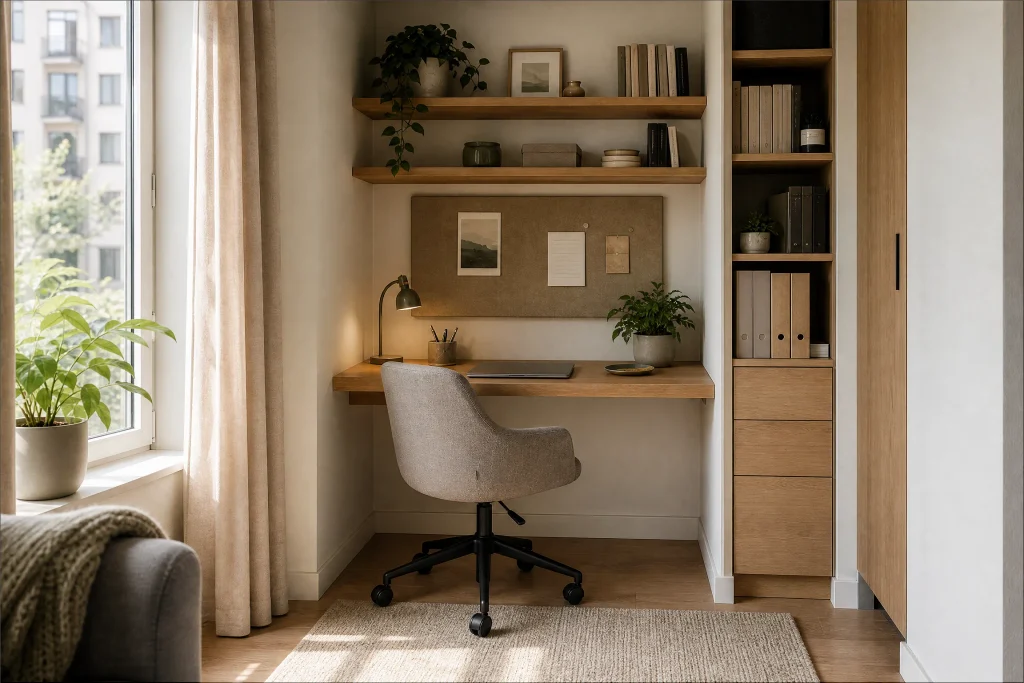
Use the walls to expand your storage. Floating shelves, a pegboard, and narrow vertical cabinets can hold office supplies while preserving valuable floor space. Functional floating corner shelves for the home office are especially useful because they turn an unused corner into an organized storage area without requiring a large bookcase.
If your office is part of a bedroom, consider a desk that can double as a nightstand or dressing table. A shallow surface with drawers can serve more than one purpose, while a wall-mounted lamp keeps the desktop open.
Color and visual weight matter in a compact office. Light walls, a simple desk silhouette, and closed storage can make the area feel less crowded. You do not have to keep the room completely white; warm beige, pale sage, and soft wood tones can create a cozy functional home office without making it feel visually heavy.
Choose accessories carefully. One plant, one piece of wall art, and one attractive storage container may be more effective than a collection of small objects. Keep the items you use every day on the desk and move everything else above, below, or behind the work surface.
Amazon product: A single monitor arm can free up desk space in a compact office and let you adjust the screen position when you switch between focused work and video calls. Shop monitor-arm options on Amazon, checking compatibility with your monitor’s size and mounting pattern first.
Photo placement: Place this image after the small-space storage paragraph to show how vertical design keeps a small office open.
Functional Home Office for Two
Designing a functional home office for two requires more than placing two chairs in the same room. Each person needs a defined work surface, comfortable seating, adequate lighting, and storage for personal supplies. Without clear zones, a shared office can quickly become crowded and difficult to maintain.
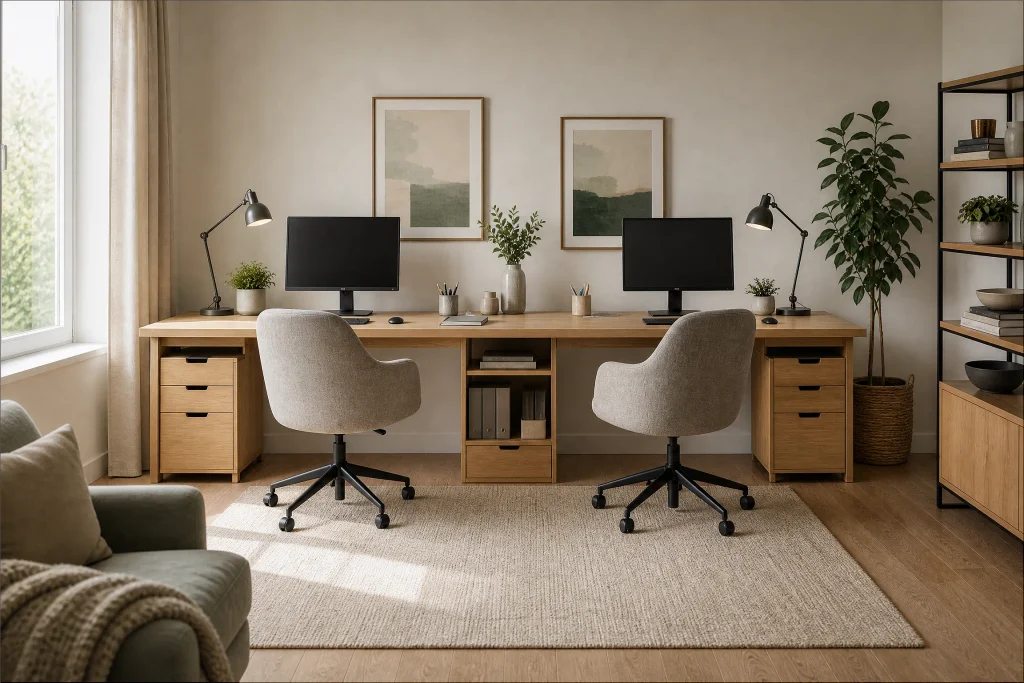
A long desk against one wall is often the simplest arrangement. It creates a continuous work surface while allowing each person to have an individual station. You can divide the desk visually with separate lamps, monitor stands, drawer units, or small plants. This approach feels cohesive without making both work areas look identical.
For a larger room, two desks positioned in an L shape can provide more separation. One person can work near the window while the other faces an interior wall. If video calls are frequent, make sure the background behind each chair is intentional. A simple shelf, framed artwork, or calm painted wall can look more professional than a busy storage area.
Storage should be shared only where it makes sense. A central cabinet can hold printer paper and common supplies, while each person should have a drawer or bin for personal items. Labeling the zones by color or position can make it easier to return things to the right place without adding visual clutter.
Lighting is another important consideration. Two people working at different times may need independent task lights rather than one bright ceiling fixture. Adjustable lamps allow each person to control brightness and direction without disturbing the other workstation.
Finally, preserve a clear path through the room. The office should feel like a comfortable shared space, not two desks pushed into every available inch. A balanced arrangement with breathing room will remain easier to use over time.
Functional Home Office in Living Room Ideas
A living room can become a multi functional living room home office when the work zone is planned as part of the room rather than added as an afterthought. The most successful designs respect both purposes: the office needs to support concentration, while the living room still needs to feel comfortable when work is finished.
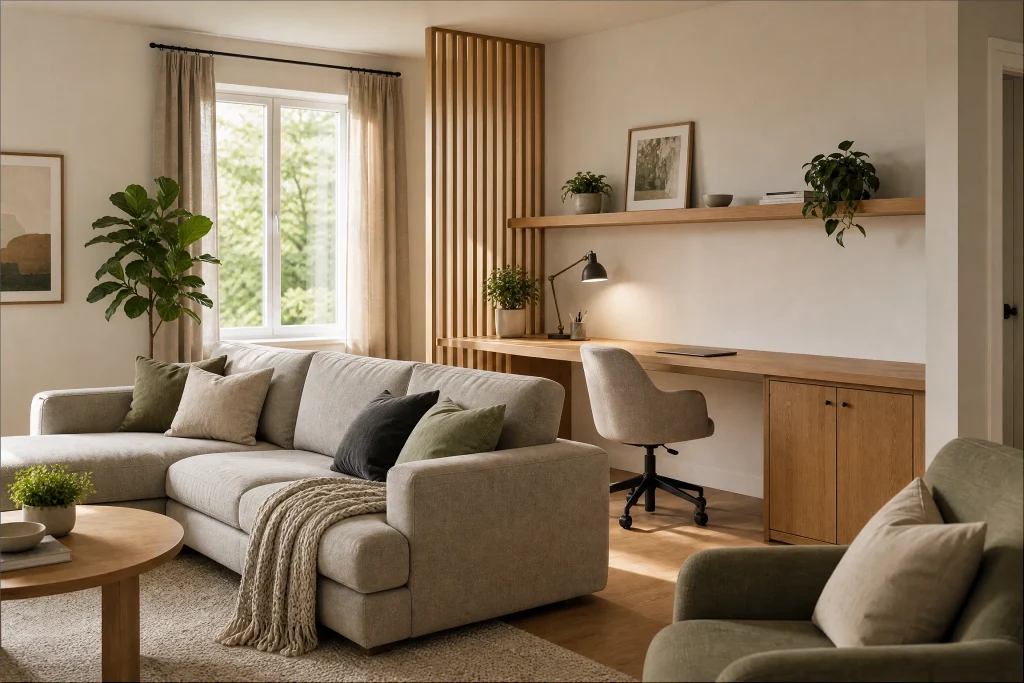
A slim desk along an empty wall is one of the easiest solutions. If the desk sits behind a sofa, it can visually define the work area without taking over the center of the room. A console-style desk, closed storage cabinet, or built-in wall unit can make the office feel more like furniture and less like equipment.
You can also use a tall bookcase, slatted divider, curtain, or change in rug placement to create separation. The divider does not need to reach the ceiling. Even a subtle shift in texture or color can tell the eye where the living zone ends and the work zone begins.
For open-plan homes, consider the direction of the desk. Facing the living room may make it easier to stay connected with family, but it can also create distractions. Facing a wall or window may support deeper concentration.
At the end of the workday, the office should be easy to close down. A desk with drawers, a lidded storage box, or a cabinet with doors can hide the laptop and small accessories. This makes the room feel like a living room again instead of a permanent workstation.
Keep the decor connected to the rest of the space. Repeat one or two colors from the sofa, rug, or curtains in the office chair and accessories. The result will feel like a functional modern home office that belongs in the room, not a mismatched corner.
Ideas for a Functional Home Office in an Enclosed Porch
An enclosed porch can become one of the most inspiring places to work because it offers abundant daylight and a stronger connection to the outdoors. However, it also requires thoughtful planning. Temperature changes, direct sun, glare, and limited wall space can all affect how comfortable the room feels during the day.
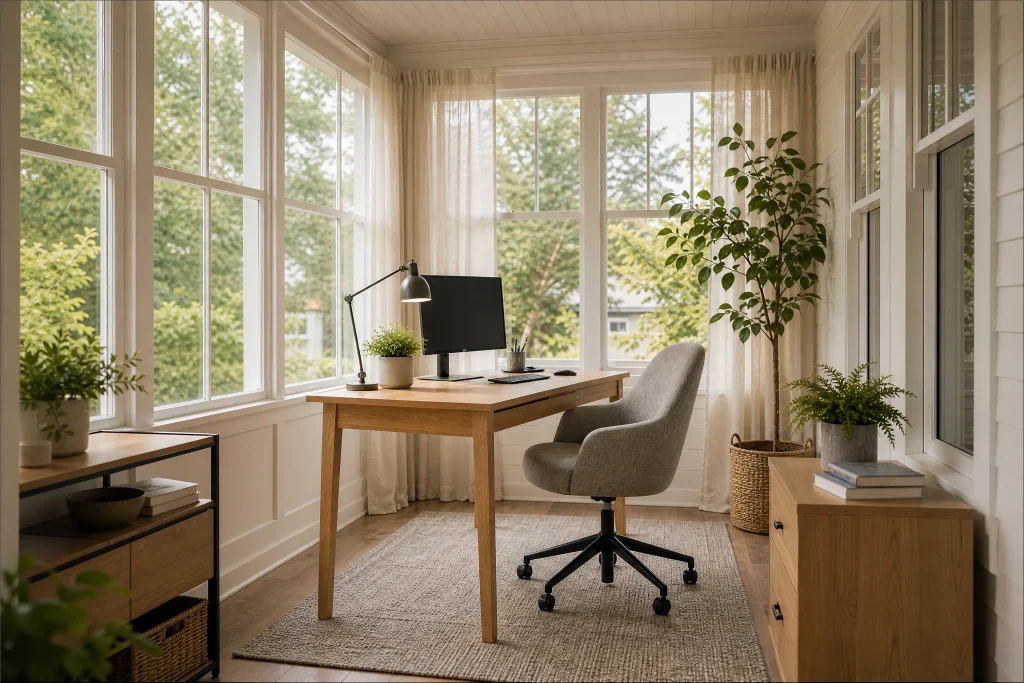
Position the desk so that windows provide light from the side rather than directly behind the monitor. Sheer curtains or adjustable blinds can soften harsh sunlight while preserving the bright feeling that makes a porch office special. A desk with a durable finish is a sensible choice, particularly if the room experiences more humidity or temperature variation than the rest of the house.
Keep the furniture simple. A practical desk, supportive chair, compact storage cabinet, and one or two plants may be all the room needs. If the porch is narrow, choose a desk that leaves enough space to open doors and move between the house and the garden.
Soft materials can make the space feel less like a passageway. Add a flat-weave rug, washable cushion, or lightweight curtain in a calm neutral color. Avoid placing delicate electronics where direct sun or moisture could damage them, and use window coverings to reduce screen glare during the brightest part of the day.
An enclosed porch can also support more than one activity. When work is finished, the desk can become a place for reading, journaling, or creative projects. This makes it a genuinely multi functional home office space, especially in a smaller home where every room needs to work harder.
Turning Your Attic Into a Functional Home Office
An attic can offer privacy, but its sloped ceilings and unusual corners demand a more customized approach. The first step is to identify the areas with enough headroom for a desk and chair. Place the main workstation where you can sit and stand comfortably, then use the lower sections of the room for storage.
Low cabinets, built-in drawers, and rolling boxes are excellent for the space beneath the eaves. They keep supplies accessible without forcing tall furniture into areas where it will not fit. A shallow shelf along the back wall can also provide storage while preserving the sense of openness.
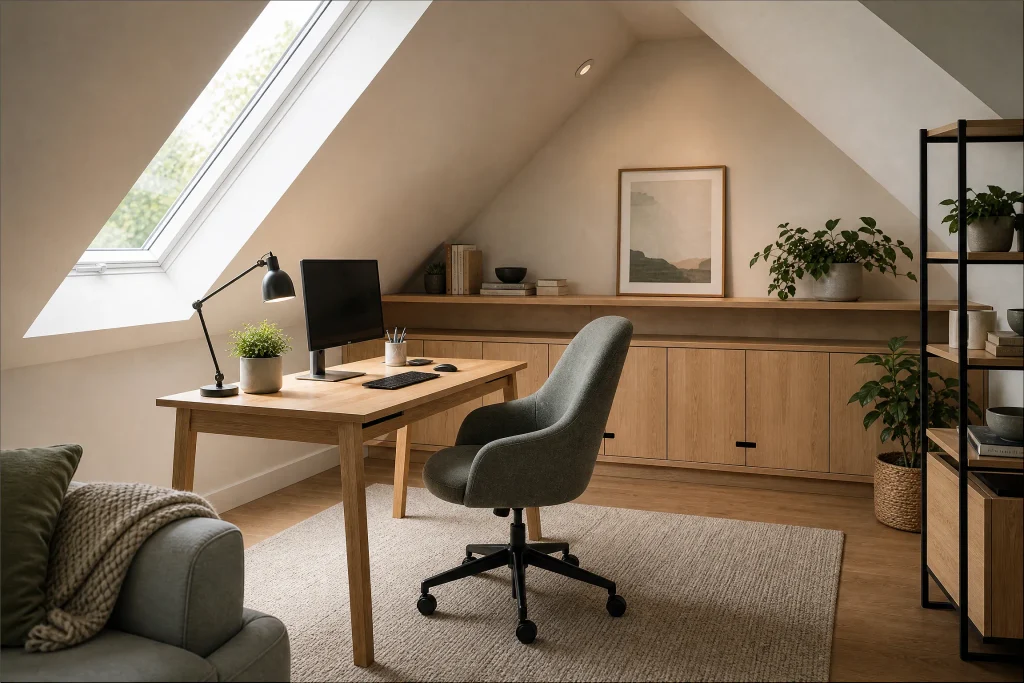
Natural light is valuable in an attic office, especially when it comes from a skylight or dormer window. Add a task lamp for cloudy days and evening work, and position the monitor to avoid direct glare. If the attic becomes warm, check airflow before adding more equipment or furniture.
Use the architecture as part of the design. Exposed beams, warm wood, and a carefully chosen rug can make the room feel intentional. Keep the color palette restrained so the ceiling angles remain a feature rather than becoming visually overwhelming.
An attic workspace should feel private but not isolated. A comfortable chair, a small plant, and a clear path to the stairs can make the room more welcoming. If you occasionally need to use the space for guests or hobbies, choose furniture that can be repurposed or moved easily.
Functional Home Office Organization and Wall Decor
Good organization is what makes a home office remain functional after the first week. Begin by dividing supplies into three groups: items used every day, items used occasionally, and items that can be stored elsewhere. The first group belongs within arm’s reach. The second group can go into drawers or nearby shelves. The third group should not occupy prime office real estate.
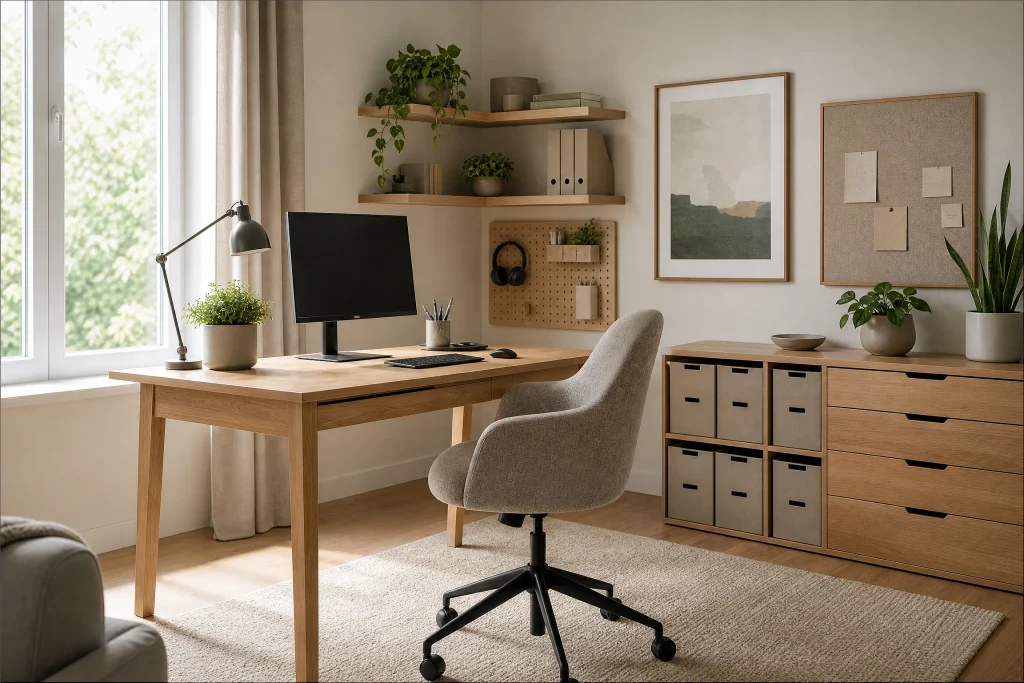
Closed storage is useful for paperwork, spare cables, and visual clutter. Open shelves work well for books, baskets, plants, and a few decorative objects. A combination of both creates a functional wall decor home office that feels styled without sacrificing practicality.
A pegboard can hold headphones, scissors, notes, and small tools. A corkboard or magnetic board can display current projects, but it should be edited regularly. When every note stays on the wall forever, the organizational system becomes another source of visual noise.
Floating shelves are particularly effective in a corner office. Keep heavy items low and lighter decor higher up. Use matching boxes or baskets to create visual rhythm, and leave some empty space so the shelves do not look overfilled.
Cable management deserves its own category. Route cords along the rear edge of the desk, bundle them by function, and use a tray or box beneath the work surface for power strips. A clean cable setup improves the appearance of the room and makes it easier to unplug, replace, or troubleshoot equipment.
Amazon product: An under-desk cable-management tray and cord organizer is a small purchase that can make a major difference in a work-from-home office. Check under-desk cable-management option on Amazon and choose a system that fits the desk thickness and number of cables you need to hide.
Love the idea of making your rental feel like home without risking your security deposit? Before you start decorating, check out these 15 damage-free rental decorating ideas that prove you don’t need nails, drilling, or a big budget to create a space that feels stylish and truly yours.
Functional and Stylish Home Office With Dark Wood Floors
Dark wood floors can give a home office depth and character, but they also make furniture placement and lighting especially important. To keep the room from feeling too heavy, balance the floor with lighter walls, a warm neutral rug, and furniture in natural oak, cream, or soft gray.
A pale upholstered chair or light wood desk will stand out beautifully against a dark floor. If you prefer a moodier room, repeat the flooring’s depth in one or two accents, such as a charcoal lamp, black shelving frame, or walnut accessory. The goal is contrast, not a room filled with one dark tone.
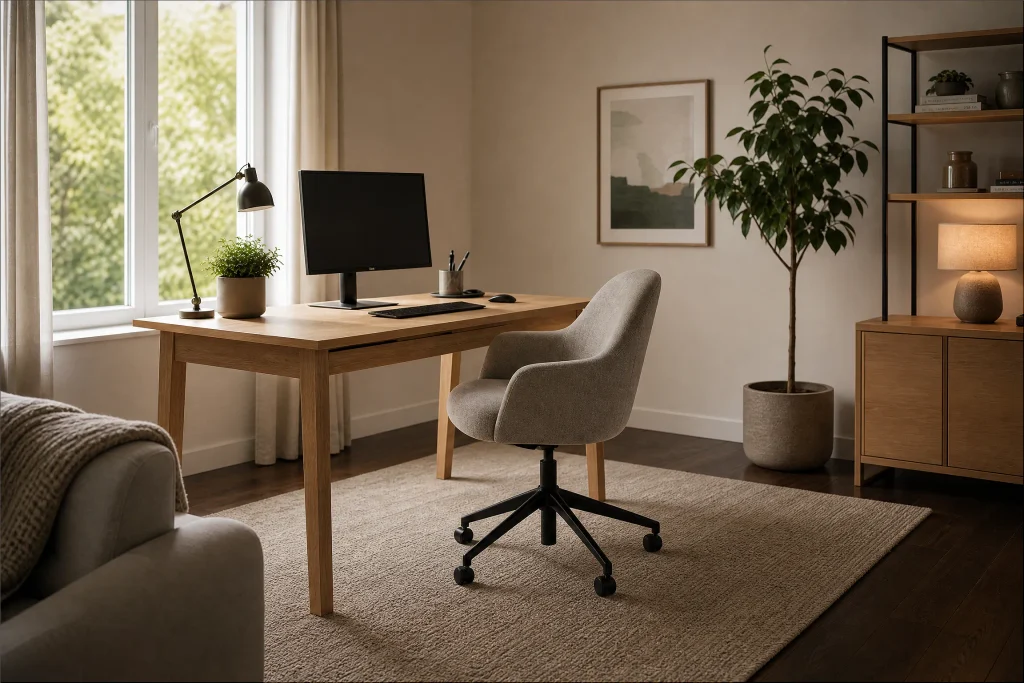
Rugs are useful for more than decoration. They visually anchor the desk and chair, soften footsteps, and create a clear work zone. Choose a low-pile style that allows the chair to move smoothly, leaving enough exposed flooring around the edges to show the character of the room.
Layer the lighting so the office remains comfortable throughout the day. Combine daylight with a focused desk lamp and a softer ambient light source. Warm bulbs can make dark flooring feel inviting, while a brighter task light keeps the work surface clear.
The finished result can be a functional and stylish home office with a polished, editorial feel. Keep the desktop restrained, use closed storage wherever possible, and let the flooring become the visual foundation rather than the dominant feature.
How to Finish Your Functional Home Office Set Up
Once the furniture is in place, test the office as if you were using it on a normal workday. Sit in the chair, open your laptop, reach for your notebook, make a video call, and walk out of the room. Notice what feels awkward. The best functional home office set up is usually refined through small adjustments rather than completed perfectly on the first attempt.
Check that the monitor is comfortable to view, the chair fits the desk, the task light does not create glare, and the most-used supplies are easy to reach. If you work from home full time, consider adding a second chair or small reading area so that every task does not happen in the same position.
A simple weekly reset can keep the space working well. Return supplies to their storage zones, clear old papers, wipe the desk, and remove anything that does not belong. Even a beautiful office can become difficult to use when temporary clutter becomes permanent.
Remember that function should lead the design, but style is what makes you want to spend time there. Add personal details gradually: a framed print, a favorite mug, a small plant, or a soft throw. These finishing touches can turn a basic workspace into a beautiful functional home office that feels comfortable and distinctly yours.
Final Thoughts on How to Create a Functional Home Office
Learning how to create a functional home office is less about copying one perfect room and more about matching your space to your daily habits. Start with the layout, choose furniture that fits your body and room, use vertical storage, control lighting, and create a simple system for cables and supplies.
Whether you are working with a dedicated room, a small corner, a living room wall, an enclosed porch, or an attic, thoughtful planning can produce a workspace that is practical and attractive. The result should support concentration during the day and feel easy to close down when work is finished.
Choose the ideas that solve your biggest problems first. Then layer in color, texture, plants, and wall decor until the space feels like home. With the right balance of comfort, storage, and personality, your office can become a reliable functional work from home office instead of a temporary desk squeezed into the nearest empty corner.